Showing all 6 results
Linear
Linear lighting provides continuous lines of light for two distinct purposes: concealed indirect illumination and featured decorative effects. This collection includes IP-rated exterior fixtures for wall grazing and pathway illumination, and interior-grade flexible LED systems with the aluminium profiles required for recessed, surface or cove lighting. These systems are specified where a continuous, uniform effect is required or where bold visual statements are desired.
Showing all 6 results
Specifying Linear Lighting
Linear lighting ranges from sealed exterior units to modular interior systems. Correct specification depends on the application and the desired aesthetic effect.
Two primary application types
Linear lighting serves two distinct design approaches:
- Concealed indirect lighting
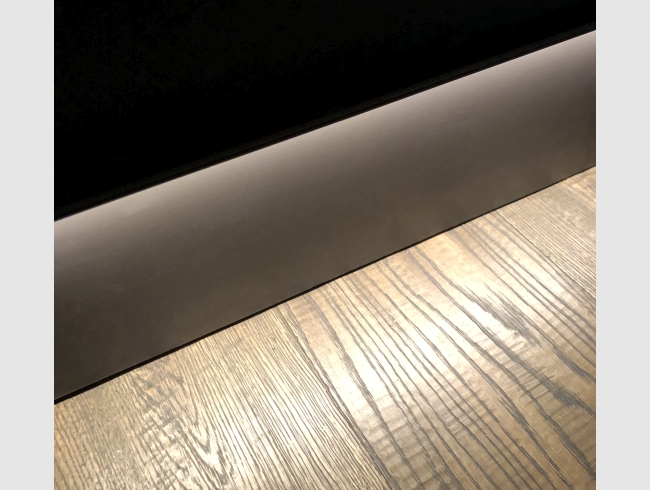
Linear lights are very bright. For applications requiring soft, indirect illumination, they should be installed on top of or under an adjacent feature – such as a shelf, cornice, architrave or under an outdoor bench seat. This conceals the light source and the emitted light creates a soft reflected glow that highlights architectural features. This technique is ideal for washing light across coffered and vaulted ceilings, or highlighting textured stone benchtops and floors. - Featured bold lighting
An alternative approach features the bright and bold appearance of the light source itself. RGB optics are often used for extra effects, and fixtures are sometimes used like neon signs to create a specific mood – such as a sense of excitement or mystery. Examples can be found in art spaces, festival locations and some public areas.
Exterior applications
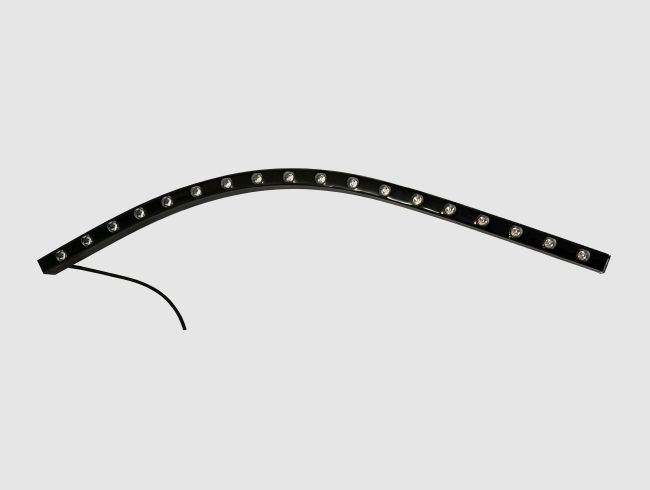
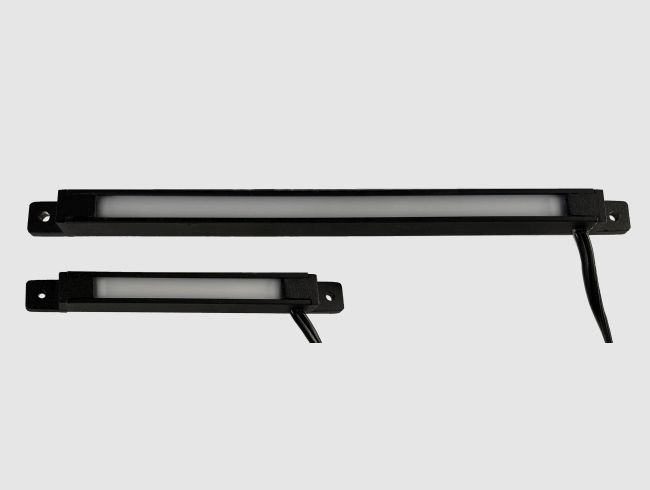
Our IP-rated linear fixtures (like the LOL-LIN-0231) are designed for wall grazing, under-eave lighting or step illumination. They are built from durable materials like anodised aluminium with high IP ratings (IP65+) to withstand outdoor conditions. We also offer inground linear options (like the LOL-IG-0230) for recessed pathway and driveway applications.
Interior applications (LED strip and profile)
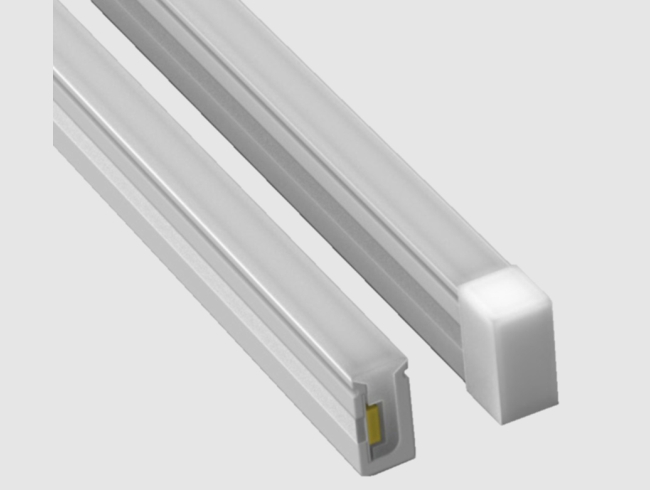
Interior linear lighting is typically a system of components. This involves selecting a flexible LED strip (based on wattage, colour temperature and output) and pairing it with an aluminium profile. Profiles are designed to be recessed into joinery or plaster, surface-mounted, or corner-mounted. A diffused cover is used to soften the light and reduce spotting.
- LED strip options
The strip is a flexible circuit board with light-emitting diodes. Strips are specified based on wattage (measured per metre), colour temperature and output. Generally, more LEDs per metre will result in higher light output and higher power usage. The trade-off between brightness and energy consumption must be considered during specification. - Flexible options
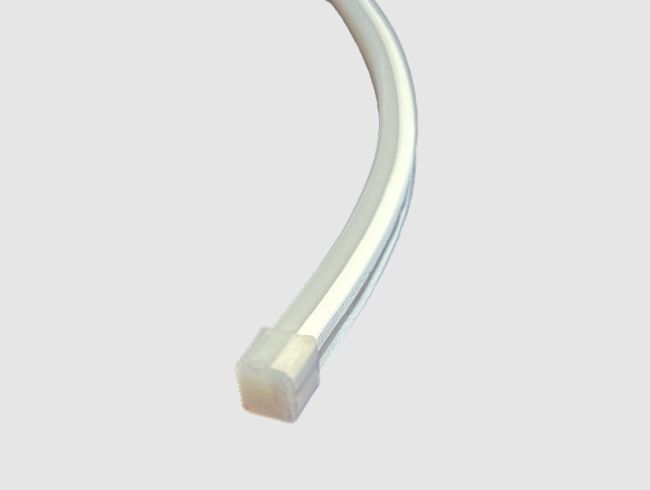
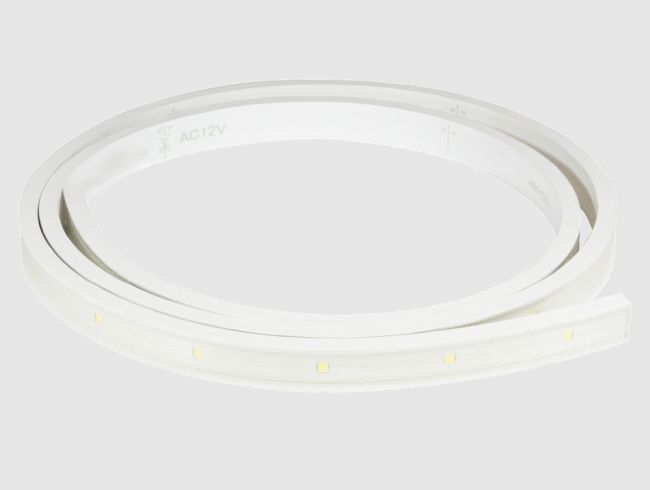
Most LED strips can be cut at marked increments determined by the spacing between LEDs. Some linear products come embedded within a flexible translucent silica strap rather than requiring separate profiles. Silica strap linear can be either 2D (flexing in two directions) or 3D (flexing in three directions) for more organic architectural or landscape forms. While extrusions and diffusers are mostly rigid, flexible extrusion options are available for curved applications. - Aluminium profiles
Profiles are designed to be recessed into joinery or plaster, surface-mounted or corner-mounted. They protect the strip, act as a heat sink to prolong LED life, and include a diffuser to shape the light. - Diffusers
Made from an opaque but light-transmitting composite material, diffusers are available in white, black or grey to coordinate with architectural finishes. To avoid seeing individual LED ‘dots’, use high-density or ‘dot-free’ style strip combined with a deeper aluminium profile and a heavily frosted (opal) diffuser, which blends the light into a continuous line.
Critical Planning Requirements
Linear lighting requires careful pre-installation planning:
- Power entry point
The entry point for the power connection can be at the front, at the end, from the top or from the sides of the extrusion. This must be specified at the time of ordering. Builders and installers should make allowance for this entry point in the construction documentation. - Length constraints
Each linear light system has a maximum run length. Be aware of these limitations during the design phase. There is also a minimum cut length, and cutting is only possible at specific intervals determined by the distances between LEDs on the strip. - Measurement
Accurate on-site measurement before ordering is highly recommended. Errors in measurement can result in insufficient length or excessive waste. - Pre-fabricated sealed fixtures
Note that if cut on site, warranty may be compromised.
System & driver requirements
Most linear systems, both interior and exterior, are low-voltage (typically 24V DC). They require a separate, remote-mounted LED driver (transformer). Our team can assist in calculating the correct driver size based on the total length and wattage per metre of the linear runs to ensure system stability.