Landscape lighting supply and specification support for
architects and landscape designers
When you’re specifying exterior lighting for a project, you need more than a product catalogue. You need a supplier who understands what the design is trying to achieve, can help resolve the technical details and will supply fittings that suit the site conditions and remain serviceable without compromising your intent.
Light on Landscape is a Melbourne lighting specialist and project supplier. Our range spans products from a number of manufacturers, with options across different materials, finishes, light distributions and technical requirements. We bring over thirty years’ experience in garden, landscape and architectural lighting to high-end residential and bespoke commercial projects.
From our Armadale studio and showroom, we supply lighting products for projects across Australia.
Lighting works best when it’s part of the conversation early. Too often, it’s considered after the main design and cost allowance decisions have already been made, when the available options are narrower and the lighting is more likely to be compromised. Bringing us in before cost allowances are fixed and electrical layouts are locked in gives the project more room to shape the lighting approach, select suitable products and allow properly for the lighting package. We can also work from an existing schedule when the design is further advanced, resolving product selection, technical information and coordinated supply.
CAD documentation is available on request as a separately scoped paid service.
Find products for your project
The Product Finder gives you a faster way to search the product range and build a project shortlist. Filter products by category, application, colour temperature, beam angle, IP rating, finish and power type, then review the relevant product details in one place.
Add multiple products and quantities to a quote request as you go. This gives your team and ours a clear starting point for confirming suitability, availability, technical requirements and project pricing.
Premium interior and exterior lighting by application
Our range covers nine product families across interior, exterior, architectural and landscape lighting applications. It is selected for projects where materials, performance, finish and long-term serviceability matter, rather than price alone.
This makes it easier to assemble a coordinated lighting package through one project supplier, including the fittings, accessories and product information needed across the project.
Accent lighting draws the eye and creates hierarchy in the garden, from highlighting a specimen tree to grazing a stone wall or creating a soft moonlight effect. The range includes spike-mounted uplights, surface-mounted fittings and tree-mount options, with adjustable fittings available for fine-tuning on site. Materials include solid brass, copper, powder-coated aluminium and composites, with IP ratings and low-voltage options suited to exterior applications.
Bespoke work starts with the brief rather than a catalogue. We arrange pendants, wall lights, pillar lights and floor lanterns when the architecture calls for something made for the project. Scale, finish, glass and mounting details can be resolved before fabrication begins. These pieces are made to order, with drawings and approvals completed before manufacture. The Portsea Cliffs pendant is one example of a bespoke fitting developed around the architecture, setting and exposed coastal conditions of a particular project.
Downlights provide functional illumination for soffits, eaves and alfresco ceilings and are often the workhorse of exterior ceiling lighting. The range includes fixed fittings for broad coverage, adjustable gimbal fittings for highlighting architectural features or grazing textured walls and pendant options for pergolas and exposed structures. We prioritise low-glare optics, including inbuilt baffles and deeply recessed lenses, along with IP ratings and finishes suited to each application and level of exposure.
Inground fittings provide uplighting and wayfinding where a minimal, flush-mounted appearance is required. Recessed into paving, decking or garden beds, they can remain visually unobtrusive while defining paths, surfaces and landscape features. The range includes small-aperture uplights, linear grazing fittings and walk-over-rated options in materials such as 316 stainless steel, solid brass and composites. Because inground lighting is highly dependent on site conditions, the selected fitting needs to be considered in relation to drainage, cable access, finish, exposure and future servicing.
Linear lighting creates continuous lines of illumination in two main ways: concealed indirect lighting that washes across architectural surfaces, or more expressive effects where the light source becomes part of the design. The range includes IP-rated exterior systems for wall grazing, under-eave lighting, steps and other architectural details, with flexible options available for curved and organic forms. Product length, driver location, cable access, finish and site measurements should be confirmed before ordering, particularly where the fitting is made or supplied to a specific length.
Path & Step lighting helps define pathways, driveways and stairways while providing controlled illumination for circulation areas. The range includes post-mounted fittings for garden beds and surface-mounted or recessed options for walls, stringers and risers. Many are designed to direct light downwards and limit glare, helping to light the surface where it is needed without making the fitting itself too visually dominant.
Wall lights shape façades, entries, fences, pillars and outdoor rooms, contributing to both circulation lighting and the architectural composition. The range includes down-facing fittings for entries and pathways, up-facing options for wall washing and bi-directional configurations that cast light upwards and downwards. The form of the fitting and the pattern it casts both become part of the design. Snoots, baffles and other glare-control accessories are available where tighter beam control is needed.
Installation accessories are essential to a reliable lighting system, including lamps, low-voltage cable, transformers, IP68 joining systems, mounting hardware, extension posts and glare-control accessories. Each component needs to be compatible with the selected fittings and suitable for the site conditions. We supply accessories as part of a coordinated project package, so the fittings and supporting components can be considered together rather than treated as separate retail items.
Installation accessories are essential to a reliable lighting system, including lamps, low-voltage cable, transformers, IP68 joining systems, mounting hardware, extension posts and glare-control accessories. Each component needs to be compatible with the selected fittings and suitable for the site conditions. We can supply accessories as part of a new lighting package and, where available, help with compatible spare parts or replacement components for existing installations.
How we work with architects and landscape designers
Projects usually come to us at one of two stages.
When the lighting direction is already established
You may already have a product reference, a developed lighting schedule or a clear visual direction.
We’ll confirm product options, finishes, availability, realistic lead times and the technical information available for the selected fittings.
If a product is unavailable or unsuitable for the location, we can suggest an alternative and explain the differences. Where a change affects the appearance, performance or design intent, the original architect or designer should remain involved in the decision.
When the lighting still needs to be resolved
Sometimes the intended lighting effect is clear, but the product detail is not.
We can talk through beam angles, mounting positions, glare control, materials, colour temperature, driver locations and the conditions the fitting will need to withstand.
With heritage homes and established gardens, for example, choosing a fitting may be the easy part. The harder question is how to introduce light without making the architecture or landscape feel overworked.
Working with landscape designers
Landscape lighting needs to work with planting, irrigation, circulation and the way the garden will change over time.
That may influence where fittings are placed, whether they can be repositioned as planting matures, how visible they are during the day and which materials suit the site conditions.
Project supply and coordination
Our preferred arrangement is straightforward: the client deals directly with Light on Landscape for quotation and supply, while the architect or designer remains involved in decisions affecting the specification, finish, scale or design intent.
This keeps the commercial relationship clear and allows us to coordinate directly with the builder or contractor when product information, timing or installation requirements need to be resolved.
Specification support and technical documentation
Detailed product information is available for products listed on our website, including specification sheets and other manufacturer documentation where provided.
If you need particular technical files for a fitting under consideration, ask us. We’ll confirm what is available and obtain further manufacturer information where possible.
We can also help with questions such as:
- suitable IP and IK ratings for the location
- beam angles and light distribution
- colour temperature
- glare control
- materials for coastal and exposed environments
- low-voltage product requirements
- transformers and drivers
- access for future maintenance
We provide product-side technical guidance. Final electrical design, circuit layout, cable sizing, installation and certification remain the responsibility of the relevant licensed professionals.
CAD documentation is available on request as a separately scoped paid service.
Why we’re selective about what we supply
Aesthetics are the starting point, not the whole picture.
We also consider materials, seals, drivers, fasteners, manufacturer support and whether the fitting can be serviced later. Those details become more important once the project has been exposed to weather, irrigation, heat and regular use.
Materials that suit the conditions
Exterior fittings may be made from solid brass, copper, marine-grade stainless steel, composites or high-quality powder-coated aluminium.
The right material depends on the location.
Across exposed Australian coastal environments, standard powder-coated aluminium is rarely our first choice. Salt air and persistent exposure can cause unsuitable finishes to deteriorate quickly. Solid brass, copper, marine-grade stainless steel or genuine marine-grade powder-coat systems generally give the project a better chance in those conditions. Further inland or in a more protected location, aluminium may be entirely appropriate.
Serviceability
We also consider what happens once the project is no longer new.
Can the lamp, LED module or driver be replaced? Are spare parts available? Can the fitting be removed for service? Is the manufacturer likely to continue supporting the product?
Where possible, we favour products with replaceable or serviceable components. A well-made fitting that can be maintained is generally a better long-term proposition than a sealed product that must be replaced entirely when one component fails.
Reducing avoidable problems after handover
The difference between a suitable product and a cheaper alternative is not always obvious when it arrives on site.
It often becomes clearer after several years of UV exposure, irrigation, salt air, temperature changes and regular use.
Well-selected products, compatible accessories and correct installation help reduce premature failures, unnecessary maintenance and avoidable callbacks.
Dark Sky and responsible lighting
Our approach to sustainability is practical.
A well-made fitting that remains serviceable for many years generally has less environmental impact than a lower-cost product that needs frequent replacement.
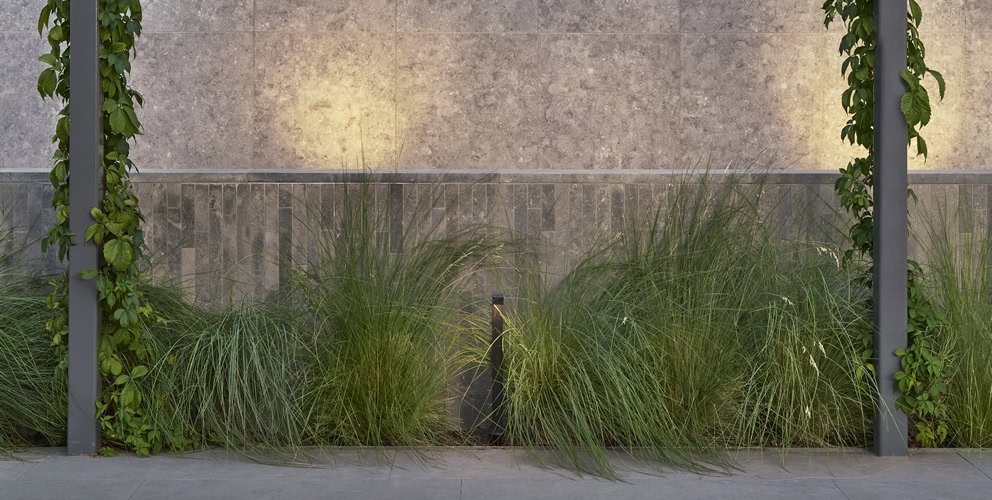
Where appropriate, we also apply Dark Sky principles around colour temperature, shielding, beam control and appropriate lighting levels.
For many residential exterior projects, 2700K to 3000K is a useful starting point. Warm light generally sits comfortably within garden settings and can help reduce unnecessary spill into neighbouring properties and the night sky.
The aim is not simply to use less light. It is to place and control the light more carefully so the project achieves the intended effect without unnecessary glare or over-lighting.
Featured project - Portsea Cliffs
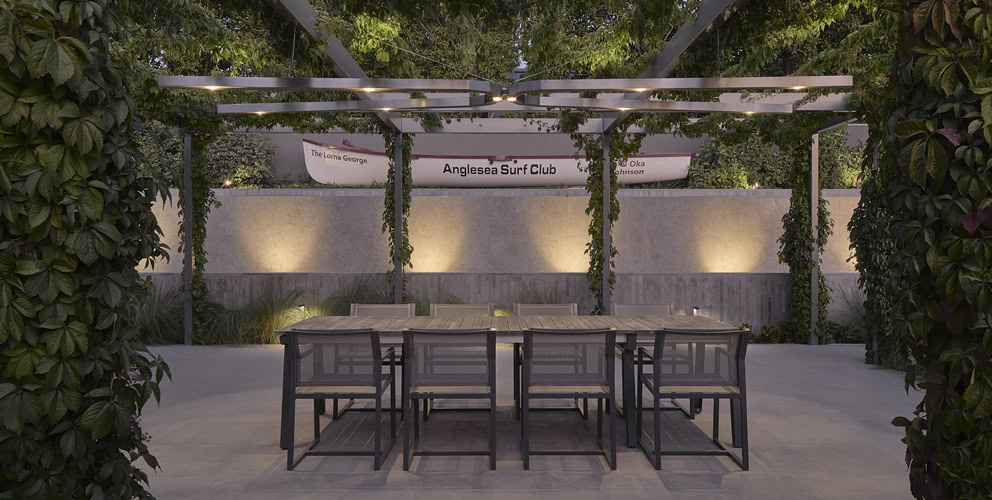
The Portsea Cliffs pendant is an example of what can be achieved when a standard catalogue product cannot meet the architectural brief or site conditions.
The fitting was developed for an outdoor dining area at a clifftop residence on the Mornington Peninsula. The site is exposed to strong wind and salt spray, so the material selection and construction needed to respond to the coastal environment.
The pendant was made in marine-grade 316 stainless steel and incorporates IP68-rated mini downlights with asymmetric beams to reduce glare at eye level. Separate switching allows the uplighting and downlighting to respond differently as the vine canopy changes through the year.
The project received a Commendation at the 2025 IESANZ Victoria/Tasmania Lighting Awards.
Common questions
Are you a lighting supplier or a lighting consultancy?
Project supply is central to what we do. We source and supply lighting from multiple manufacturers, with consultation, product selection and specification support available where the project needs them.
Can you work from an existing lighting specification?
Yes. Contact us with the project requirements and we’ll discuss product options, available documentation and lead times.
If a specified product isn’t right for the location or isn’t available in time, we’ll suggest an alternative and explain why.
Can you help before the outdoor lighting design is final?
Yes. We can become involved while the lighting approach is still being shaped or once the intended effect has been established and product selection needs to be resolved.
Earlier involvement is particularly useful where budgets, product availability, coastal exposure, inground lighting, concealed drivers or unusual mounting conditions could affect the final result.
Can you provide IES files and CAD drawings?
Yes, for most products. Documentation availability varies by manufacturer. Tell us what you need and we’ll confirm what is available. Please note that CAD documentation is a paid service.
What are typical lead times?
Lead times vary by product, finish, quantity, availability and whether custom work is required. We confirm current timing when we quote. If your program is tight, tell us early so we can check availability and discuss suitable alternatives.
Do you provide installation?
We supply products and help with product information and practical guidance. Installation is handled by the contractor responsible for the work.
Where appropriate, we can refer you to qualified and verified contractors.
Can I visit your showroom?
Yes, by appointment only.
Our showroom is at 712 High Street, Armadale VIC 3143.
Showroom visits are by appointment, Monday to Friday from 10am to 4pm. Call +61 3 9509 8000 before visiting so we can make sure the relevant products or samples are available.
Get in touch
Whether you need pricing on specific products, technical documentation, or want to discuss options for an upcoming project – we’re here to help.
Light on Landscape
712 High Street, Armadale VIC 3143 – appointment required
Monday-Friday, 10:00-16:00
Phone: +61 3 9509 8000