Showing all 8 results
Wet Areas
Wet area lighting is designed for locations that are fully submerged in water or frequently exposed to moisture. These fixtures illuminate fountains, fishponds, reflection pools and water features, and can be specified for poolside terraces, waterfall surrounds and interior wet spaces such as bathrooms and ensuites. This collection includes fixtures with mounting plates and brackets, surface-mounted options and recessed configurations. All fixtures in this category are engineered with sealed construction to prevent water ingress and are specified where standard IP ratings are insufficient.
Showing all 8 results
Specifying Wet Area Lights
Wet area fixtures require specialised construction to withstand continuous water exposure and moisture ingress. Correct specification is critical for longevity and safe operation.
Primary applications
Wet area lights serve both functional and aesthetic purposes in water-adjacent and submerged installations:
- Fountains and water features
Illuminating moving water from below or within the water feature structure itself. - Fishponds and reflection pools
Providing ambient light in ornamental water bodies where the fixture may be fully submerged. - Waterfall surrounds
Lighting areas adjacent to waterfalls or cascades where constant water spray creates wet conditions. - Poolside terraces
Illuminating areas immediately adjacent to swimming pools that are regularly splashed or hosed down. - Interior wet areas
Lighting bathrooms, ensuites and shower spaces where moisture levels are consistently high.
Important note on swimming pools:
Our range does not include lights designed for installation within swimming pools. Pool lights must meet specific requirements for chemical resistance, depth rating and pressure, which are best addressed by pool contractors who specialise in these applications. For lighting around pools rather than in them, our wet area fixtures are appropriate.
IP68 rating requirement
All wet area lights should have an IP68 rating or an equivalent protection standard. This rating confirms that all seals, gaskets and wiring entry points are engineered to prevent any moisture from entering the fixture, even under full submersion. The IP68 standard is the minimum acceptable protection level for fixtures that will be submerged or constantly exposed to water.
Configuration options
Wet area fixtures are available in several mounting configurations:
- Mounting plates and brackets
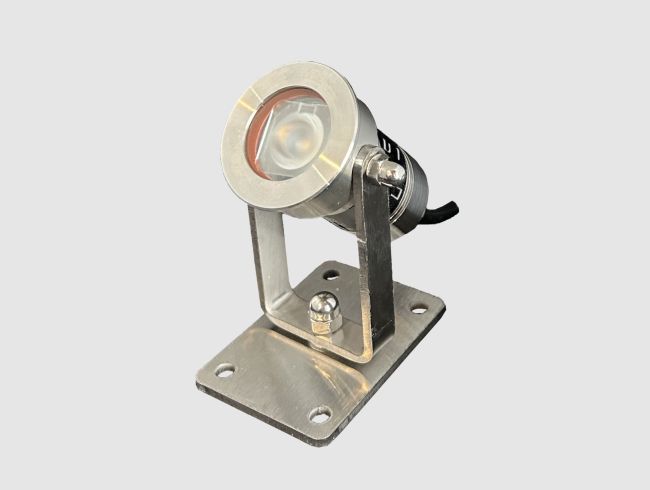
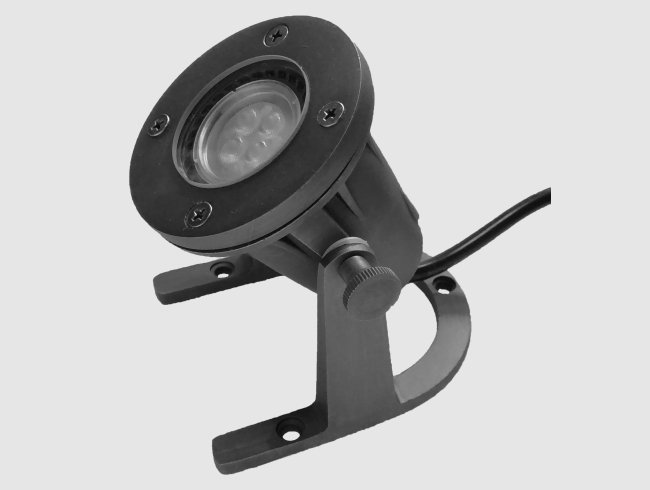
Fixtures supplied with dedicated mounting hardware for secure installation on pond walls, fountain structures or pool surrounds. These systems allow for precise positioning and reliable fixing in underwater environments. - Surface-Mounted
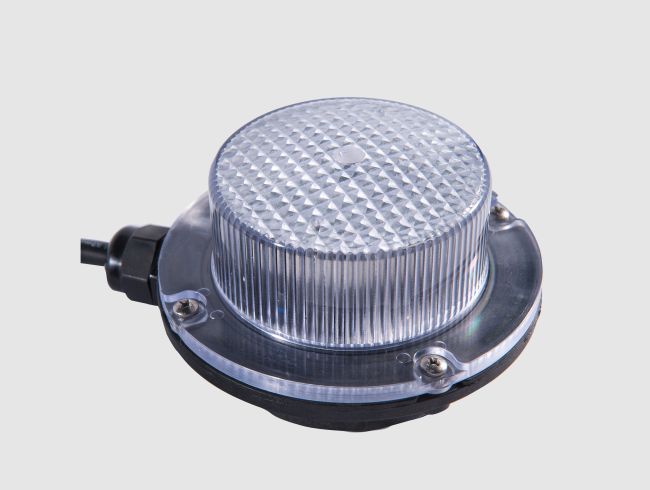
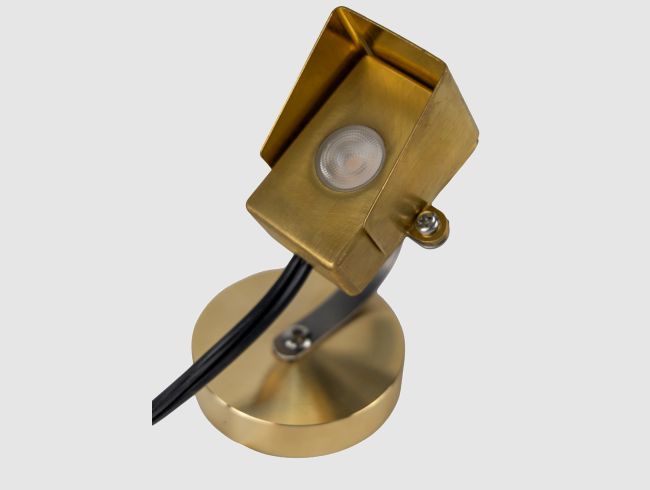
Fixtures designed to be mounted directly onto surfaces where a low-profile installation is required. Common in poolside applications or fountain bases. - Recessed
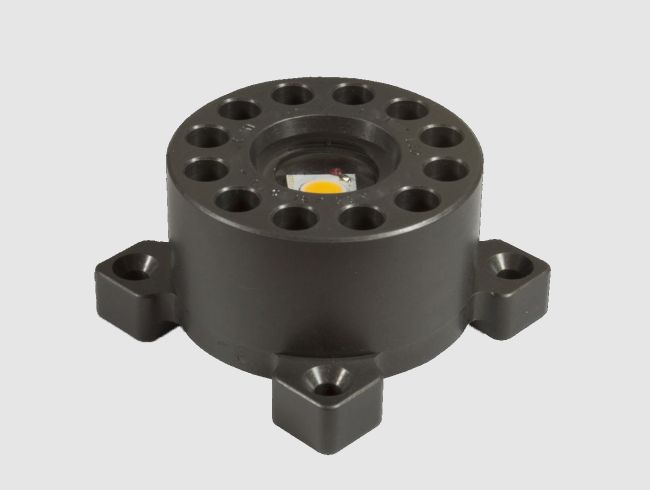
Fixtures installed flush with surfaces for a minimal visual presence. These require careful installation planning to ensure correct sealing and drainage around the fixture housing.
Materials and construction
Corrosion resistance is paramount in wet environments, particularly where fixtures are submerged or exposed to chlorinated or salt water. Our fixtures use materials selected for maximum durability:
- 316 Stainless Steel
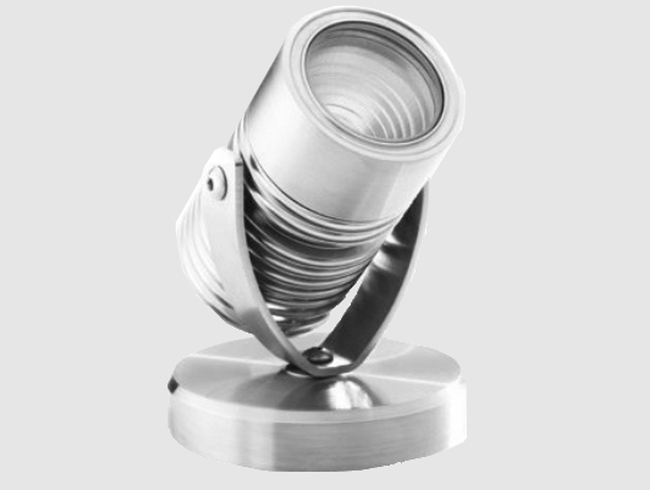
Marine-grade stainless steel is the standard for wet area applications. It offers superior corrosion resistance even in harsh chemical or salt water environments. - Solid Copper and Cast Brass
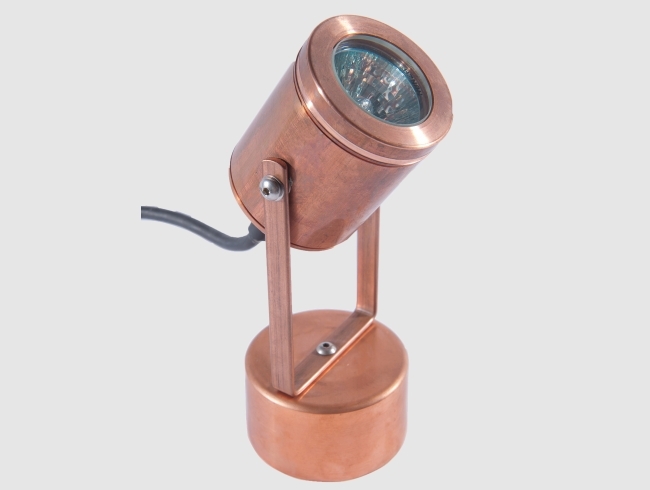
Used for their inherent corrosion resistance. Both materials will develop a natural patina when submerged, which is a desirable characteristic. - Composite Materials
Advanced non-metallic materials specified for weight reduction or electrical insulation requirements. - Specialised Powder Coatings
Where metal housings are used, specialised marine-grade powder coatings provide additional protection against water and chemical attack.
Critical installation and serviceability requirements
- Cable length for maintenance
We strongly recommend that underwater fixtures are installed with sufficient cable length to allow the fixture to be pulled out of the water for maintenance, lamp replacement or inspection. If cable length is insufficient, the entire water body will need to be drained to service the fixture. This requirement should be discussed with your installer and planned into the installation design. - Wiring and connections
All wiring connections must be fully sealed using IP68-rated junction boxes and connection methods. No connections should be made underwater. All joins must be located in dry, accessible locations for inspection and maintenance. - Drainage considerations
For fixtures installed adjacent to water features (rather than submerged), adequate drainage must be provided to prevent water pooling around the fixture even though it is IP68 rated.
Technical and system requirements
- Voltage
Most underwater and wet area fixtures are low-voltage (12V or 24V) for safety. All installations require a suitable weatherproof transformer (driver) located in a dry, protected position. Some poolside and water feature installations may incorporate extra-low voltage systems (typically 12V) to eliminate electrical hazard risk. - Professional installation
All wet area lighting installations must be completed by a licensed electrician with experience in wet area and underwater electrical work. Compliance with Australian Standards for electrical installations in swimming pools and wet areas is mandatory. Installation errors can create serious safety hazards and will void warranties.